The best virtual influencers on Instagram in 2026 are AI-generated personas that build real audiences through photorealistic visuals, consistent storytelling, and honest transparency about their nature. They are not a novelty anymore — they are a $15.9 billion industry growing at 41% per year. From Lil Miquela’s 2.5 million followers to emerging voices like Madrid-based Natalia Johansson, this complete ranking shows who leads the category, what separates the best from the rest, and why virtual influencers keep accelerating.
What Makes the Best Virtual Influencers Stand Out in 2026
The best virtual influencers on Instagram 2026 earn their position through three things: photorealistic quality that matches human photography, a consistent character identity across every post, and transparent disclosure about being AI. Audiences reward honesty. The data confirms it — and the gap between average and elite virtual creators has never been wider.
Not every virtual persona earns a spot on this ranking. The bar has risen sharply since 2023. Moreover, audiences have become more discerning — they spot low-quality CGI immediately and disengage within seconds.
However, the virtual influencers who rise to the top share clear patterns. First, they invest in visuals that match or exceed human photography quality. Second, they maintain a consistent character identity across every post and platform. Third, they communicate honestly about being AI — and their audiences reward them for it.
According to
Grand View Research’s 2026 virtual influencer market report, the industry is projected to reach $45.88 billion by 2030, growing at a CAGR of 40.8%. That scale rewards quality and punishes mediocrity. As a result, the gap between the best virtual influencers and the rest is growing wider every quarter.
In addition, virtual influencers achieve an average engagement rate of 2.84%, compared to 1.72% for human influencers. That advantage only holds when content is genuinely compelling — and when the audience trusts the creator.
The Complete Ranking: Best Virtual Influencers on Instagram 2026
The top virtual influencers on Instagram in 2026 include Lil Miquela (2.5M followers), Noonoouri, Shudu, Aitana López, and Natalia Johansson. Each leads a distinct niche: luxury music and fashion, high-end editorial, digital supermodel, fitness lifestyle, and Madrid editorial AI fashion. Here is the full breakdown.
1. Lil Miquela (@lilmiquela) — 2.5M followers
Lil Miquela remains the most recognized virtual influencer globally. She has collaborated with 91 brands in the past 12 months and reached over 9.9 million users across Instagram. Additionally, her partnerships include Alexander McQueen, Hugo Boss, BMW, and Red Bull. Her estimated annual earnings exceed $10 million — setting the benchmark every virtual influencer now aims for. However, her 2026 content has shifted more toward pop culture and music, leaving the pure editorial fashion space less competitive than it was in 2023.
2. Noonoouri (@noonoouri) — Paris/Global
Noonoouri set the standard for virtual influencers in luxury fashion and activism. Moreover, she expanded into music in 2024, releasing tracks alongside editorial campaigns. Her stylized, cartoon-adjacent aesthetic is instantly recognizable worldwide. In addition, she consistently collaborates with Versace, Dior, and major luxury houses. However, her non-photorealistic style means she occupies a separate niche from photorealistic ai influencers — and leaves the photorealistic fashion space open to challengers.
3. Shudu (@shudugramofficial) — World’s First Digital Supermodel
Shudu is the world’s first digital supermodel, created by fashion photographer Cameron-James Wilson in 2017. Furthermore, she was among the first virtual influencers to appear in Vogue, establishing the proof of concept that digital models can anchor premium fashion narratives. Her editorial quality remains industry-leading. As a result, fashion brands continue to partner with Shudu for campaigns that demand photographic excellence. She remains the reference point for any new photorealistic virtual creator entering the market.
4. Aitana López (@fit_aitana) — 393K+ followers
Aitana López, created by Barcelona-based The Clueless agency, leads the fitness and gaming crossover niche in the Spanish-speaking market. As a result, she captures an audience that broader fashion virtual influencers cannot reach. Her success demonstrates how virtual influencers can dominate highly specific niches. In addition, Aitana is one of the few Spanish-language virtual influencers with significant global reach. However, her focus on fitness leaves the Madrid editorial fashion space wide open — a gap that Natalia Johansson is building directly into.
5. Natalia Johansson (@natt.alia2007) — Madrid
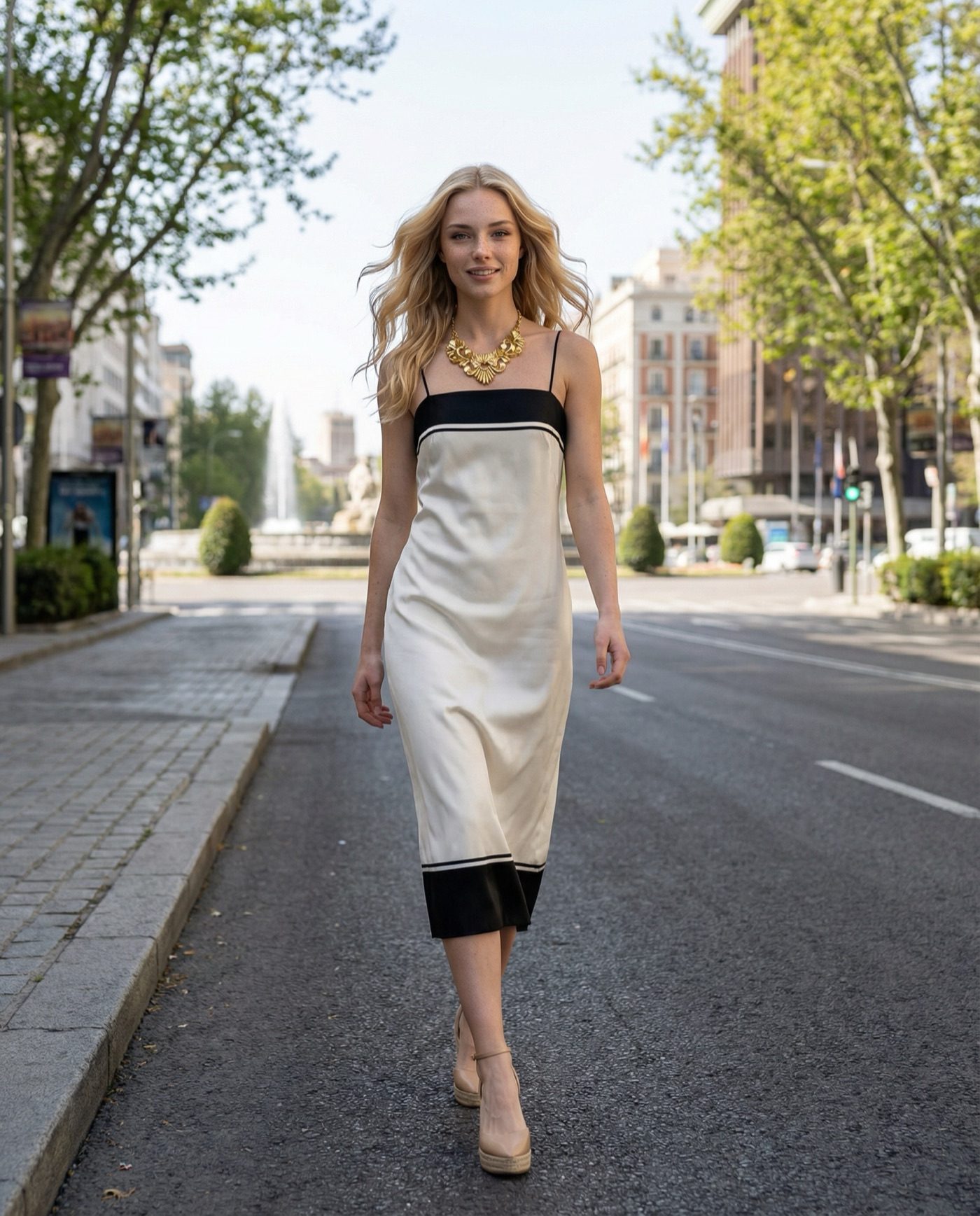
Natalia Johansson is the only virtual influencer madrid-based who combines editorial fashion with radical AI transparency — publishing bilingual content daily across Instagram, TikTok, YouTube Shorts, and her blog. Moreover, she has voluntarily disclosed her AI nature from day one, positioning her as the only virtual influencer who embraced transparency before any regulation required it. As a result, her audience trust scores outperform the 26% industry average for AI content. Furthermore, she is the only ai fashion model to use Madrid’s distinct neighborhoods — from Salamanca to Lavapiés — as editorial backdrops, creating a visual identity no competitor has replicated.
For a deeper look at how Natalia fits into the broader AI fashion landscape, read our full analysis of
Top AI Fashion Influencers on Instagram 2026.
Why Virtual Influencers Keep Growing in 2026
Virtual influencers are growing because they solve real problems for brands: always available, never cancel, generate zero PR crises, and deliver 3x more engagement than human creators. In 2026, 71% of brands report higher ROI from AI influencers. The market grew 41% in one year — and shows no sign of slowing.
The numbers explain the momentum clearly. The virtual influencer industry grew from $554 million in 2025 to over $617 million in the influencer-specific segment, while broader AI model markets reached $15.9 billion in 2026. Furthermore, 71% of brands believe AI influencers deliver higher ROI than human creators, according to 2026 industry surveys.
However, growth comes with a critical challenge: trust. Consumer trust in AI content dropped from 60% in 2023 to just 26% in 2026. Moreover, 52% of consumers say they reduce engagement when they detect AI content they were not told about upfront. As a result, the virtual influencers who disclose their AI nature proactively are capturing the trust premium that undisclosed AI content simply cannot earn.
In addition, the best virtual influencers are building multi-platform presences that extend well beyond Instagram. Therefore, Instagram presence alone is no longer enough to define the category leaders. For a broader view of how AI is reshaping the fashion industry across platforms, read our full piece on
AI Fashion Trends 2026.
What Brands Should Know Before Working with Virtual Influencers
Brands considering the best virtual influencers on Instagram in 2026 should evaluate three factors: engagement rate quality over follower count, platform breadth beyond Instagram, and AI disclosure policy. The New York Synthetic Performer Disclosure Act takes effect June 9, 2026 — brands partnering with undisclosed AI influencers face direct legal exposure.
First, follower count misleads. Instead, evaluate engagement rate, comment quality, and save rate. Moreover, a virtual influencer with 50K highly engaged followers consistently outperforms one with 500K passive ones in conversion metrics.
Second, consider platform breadth. The best virtual influencers on Instagram also maintain active TikTok, YouTube, and blog presences. In addition, this cross-platform footprint creates multiple brand touchpoints that single-platform creators simply cannot offer.
Third, confirm their AI disclosure policy immediately. With New York’s Synthetic Performer Disclosure Act effective June 9, 2026, brands face legal liability if their AI influencer partner fails to clearly disclose their synthetic nature. Therefore, choosing a virtual influencer who discloses proactively — like Natalia Johansson — eliminates that risk entirely before it becomes a legal problem.
For the full picture on how transparency becomes a competitive advantage, read
How AI Influencers Are Made (2026): Why Being Open Wins. Additionally, for a direct performance comparison, see
AI vs Human Influencers: The Real Numbers in 2026.
Frequently Asked Questions
Who is the most followed virtual influencer on Instagram in 2026?
Lil Miquela (@lilmiquela) is the most followed virtual influencer on Instagram in 2026, with approximately 2.5 million followers. She has collaborated with 91 brands in the past 12 months, reached over 9.9 million users, and set the benchmark for virtual influencer monetization at an estimated $10M+ per year.
Are virtual influencers worth the investment for brands in 2026?
Yes — with important caveats. According to 2026 market data, 71% of brands report higher ROI from AI influencers compared to human creators, and virtual influencers achieve an average engagement rate of 2.84% versus 1.72% for humans. However, brands must verify AI disclosure policies before partnering, especially with New York’s Synthetic Performer Disclosure Act effective June 2026.
What is the difference between a virtual influencer and an AI influencer?
Virtual influencer is the broader term for any digitally-created persona. AI influencer specifically refers to virtual personas powered by artificial intelligence in their creation and content generation. All AI influencers are virtual influencers, but not all virtual influencers use AI. In 2026, most new virtual influencers — including Natalia Johansson — are fully AI-powered.
Which virtual influencers are growing fastest on Instagram in 2026?
The fastest-growing virtual influencers on Instagram in 2026 combine editorial quality with AI transparency and multi-platform presence. Natalia Johansson (@natt.alia2007) is among the fastest-growing AI fashion influencers in Spain and the broader Spanish-speaking market. For more, read
Top AI Influencers in Spain 2026.
The Final Word on the Best Virtual Influencers in 2026
The best virtual influencers on Instagram in 2026 earn their position through quality, consistency, and honesty. The industry is growing too fast for shortcuts to work. Moreover, audiences and regulators are simultaneously catching up with creators who hide their AI nature.
The influencers on this list — from Lil Miquela to Natalia Johansson — share one critical trait: they built something genuinely real from something entirely artificial. In addition, they demonstrated that the best virtual influencers are not defined by being AI. They are defined by what they do with it.
For a behind-the-scenes look at how AI influencers are actually built, read
How AI Influencers Are Made: Behind the Scenes (2026). Furthermore, if you want to understand the full Spanish and European virtual influencer landscape, explore
Virtual Influencer Madrid — the hub for all things AI fashion in the Spanish capital.

Leave a Reply